


Mar
The ramen shop’s 30 min rule — and why tourists should embrace it
Japan’s tourism boom is creating real friction for ramen shop owners. But the fix is simpler than you might think — and the opportunity is real.
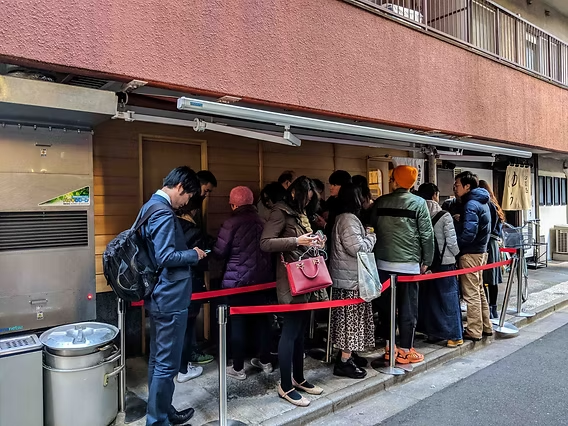
Picture the scene: a narrow shopfront somewhere in Tokyo, a hand-painted sign above the door, a queue of eight or ten people snaking along the footpath in the cold. Nobody is complaining. They are waiting with the particular patience of people who know exactly what they are waiting for and have decided it is worth it. Inside, the counter seats maybe a dozen. Bowls come out fast, are eaten faster, and the seat is vacated with quiet efficiency. Twenty, twenty-five minutes from sit-down to thank-you-goodbye. The queue moves. The next customer enters. The rhythm holds.
This is ramen as it has always worked in Japan — not just as food, but as a finely tuned economic system. The ramen shop is a high-turnover business built on a high-turnover culture. Japanese customers understand this intuitively. They come hungry, eat with focus, and leave. The experience is purposeful and brief, and for the owner running tight margins in an expensive city, that brevity is not incidental — it is the entire business model.
Then came thirty million tourists a year. Many of them, armed with must-visit ramen lists from food blogs and social media guides, arrive at that same narrow counter and do what any reasonable diner would do anywhere else in the world: they settle in. They photograph the bowl. They savour the broth. They sit with the experience for an hour, maybe more. By the standards of almost every other dining culture on earth, this is perfectly normal behaviour. In a twelve-seat ramen shop in Tokyo, it quietly cuts the owner’s lunch turnover in half.
For the shop owner, the tourism boom cuts both ways – it is an opportunity, yet at the same time it can be a drain on customer turnover and in turn profits. Some owners are already adapting smartly: clearer English menus, ticket machines that streamline ordering, and yes, politely posted thirty-minute dining guidelines that set expectations before anyone sits down. A small sign asking diners to be mindful of the queue is not unwelcoming — in Japan, it is just honest communication, and most tourists, given the context, will respect it.
That context is worth spelling out more broadly, because most visitors genuinely do not know the code. They are not being inconsiderate — they simply have no frame of reference for a dining culture built around speed and turnover. If they understood that lingering for an hour is costing the owner two or three covers, and that the twenty-minute rhythm is part of what makes the whole experience work, most would adjust without complaint. Part of travelling well is learning local customs. In Japan, eating ramen quickly is not a limitation — it is the point. The focus, the efficiency, the clean exit: these are features, not inconveniences.
For tourists, embracing the thirty-minute rule is also just better travel. The ramen shop is not a place to linger — it is a place to eat one very good bowl of noodles and carry that warmth out into the street with you. The experience does not need an hour to land. If anything, the brevity is part of what makes it memorable.
Japan’s tourism boom raises plenty of complicated questions without easy answers. This one, at least, has a practical solution sitting right there on the counter — right next to the togarashi and the pickled ginger. Eat well, eat quickly, and leave the seat for the next person in the queue. The owner will thank you. So will the ten people standing outside in the cold.

Sorry, the comment form is closed at this time.